
Top 12 Supplements You Actually Need | When, Who & How to Take Them
Discover the top 12 supplements including vitamins and minerals, who should take them, when to use them, and how they support fat loss, muscle gain, and overall health.
Vipinrajworld
2/1/20264 min read
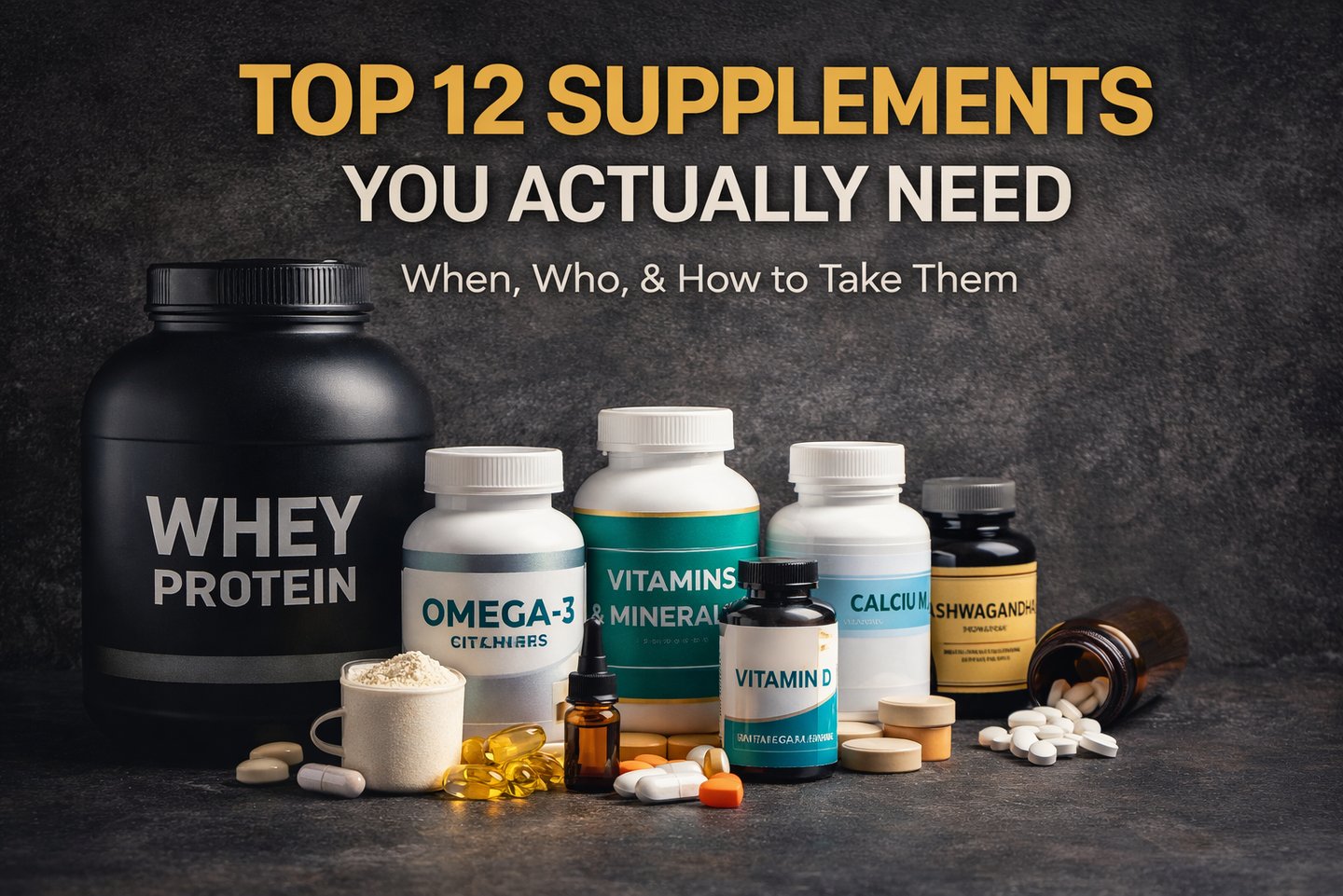
Supplements are one of the most confusing parts of the fitness industry.
One person swears by a supplement.
Another says it’s useless.
Brands promise miracles.
Influencers sell stacks you don’t need.
The truth is simple: Supplements don’t replace nutrition, training, or lifestyle. They support them.
When used correctly, supplements can:
Fix real nutrient gaps
Improve recovery and performance
Support fat loss and muscle gain
Prevent long-term deficiencies (especially common in modern diets)
When used blindly, they:
Waste money
Create false expectations
Sometimes do more harm than good
Soft disclaimer:
This article is for educational purposes. Supplements are not medications. If you have a medical condition, are pregnant, or are on medication, consult a qualified healthcare professional before supplementation.
1. Whey Protein
When do you need Whey Protein?
It is needed when your daily protein intake is not met through food alone. In veg-heavy diets, protein is often the most limiting nutrient.
Who should take it?
Individuals struggling to hit protein targets
Busy professionals with limited meal prep time
People trying to lose fat without losing muscle
Timing
Post-workout is best due to fast absorption
Or anytime during the day to complete protein intake
Benefits
Helps preserve and build lean muscle
Improves satiety during fat loss
Convenient, high-quality protein source
Important: Whey is a Natural food supplement, not a muscle-building drug.
2. Creatine Monohydrate
When do you need it?
When strength, power, and muscle performance are priority.
Who should take it?
Regular gym-goers
Strength trainees
For Athletes Only: Competitive athletes and power sports
Timing
Anytime daily (consistency matters more than timing) - 5-20gm daily based on level of athleticism
Benefits
Improves strength and training performance (Enhances ATP production)
Supports muscle mass over time
Helps with workout recovery
Note: Creatine does NOT damage kidneys in healthy individuals (well-established research).
3. Vitamin D3
When do you need it?
When sunlight exposure is limited, which is common even in sunny countries like India.
Who should take Vitamin D?
Everyone needs Vitamin D
People with low sun exposure
Individuals with low energy or frequent illness
Timing
With a fat-containing meal (morning or lunch preferred)
Benefits
Supports bone health
Improves immunity
Plays a role in hormone production and muscle building
Vitamin D deficiency is extremely common globally.
4. Vitamin B12
When do you need Vitamin B12?
When following a vegetarian or vegan diet, or experiencing fatigue and neurological symptoms.
Who should take Vitamin B12?
Vegetarians and vegans
People with low energy despite good sleep
Older adults
Timing
Morning, after breakfast
Benefits
Supports nerve health
Improves energy metabolism
Prevents anemia
Note: Vitamin B12 is almost absent in plant-based diets.
5. Omega-3 (Fish Oil)
When do you need Fish Oil?
When your diet lacks fatty fish or omega-3-rich foods.
Who should take Fish Oil?
Vegetarians
People with joint pain or inflammation
Individuals focused on heart and brain health
Timing
With Fat containing meals (preferably lunch or dinner)
Benefits
Reduces inflammation
Supports heart and brain health
Aids joint recovery
6. Magnesium
When do you need Magnesium?
When experiencing poor sleep, muscle cramps, or high stress.
Who should take Magnesium?
People with sleep issues
High-stress individuals
Regular gym goers and athletes
Timing
Before bed time
Benefits
Improves sleep quality
Reduces muscle cramps
Supports nervous system function
7. Zinc
When do you need Zinc?
When immunity is weak or recovery feels slow especially in active individuals.
Who should take Zinc?
People frequently falling sick
Vegetarians (plant zinc has lower absorption)
Athletes under heavy training loads
Timing
After meals (not on empty stomach)
Benefits
Supports immunity
Helps in increasing Testosterone levels
Helps hormonal balance
8. Iron (⚠️ With Caution)
When do you need Iron?
Only when diagnosed deficiency exists. Most women are highly deficient in Iron.
Who should take Iron?
Women with heavy menstrual cycles
Diagnosed iron-deficient individuals
Timing
Morning, away from calcium or coffee (reduces Iron absorption)
Benefits
Improves oxygen transport
Reduces fatigue caused by anemia
Helps in increasing Haemoglobin
Never supplement iron without blood tests and Professional guidance.
9. Electrolytes (Sodium, Potassium)
When do you need Electrolytes?
When training intensely, sweating heavily, or following low-calorie diets.
Who should take Electrolytes?
People exercising regularly
Those feeling dizziness or fatigue during workouts
Individuals training in Hot-climate
Timing
During or post-workout to replenish lost electrolytes and prevent cramps and fatigue
Benefits
Maintains hydration within muscles (Muscles are 70% water)
Prevents cramps
Improves workout performance
10. Multivitamin
When do you need Multivitamin?
When diet variety is poor or calorie intake is restricted, there are several gaps in nutrition.
Who should take Multivitamin?
Busy Individuals
People with inconsistent diets or not having enough fruits and vegetables
Timing
With meals (Preferably after breakfast)
Benefits
Covers minor nutrient gaps
Acts as nutritional insurance
Helps overcome micronutrients deficiency
Multivitamins are supportive, not a replacement for food.
11. Calcium
When do you need Calcium?
When dairy intake is low or bone health is a concern.
Who should take Calcium?
People with low dairy consumption
Older adults and even children
Women at risk of bone density loss
Timing
With meals (not with iron)
Benefits
Supports bone strength
Works synergistically with Vitamin D and Magnesium
12. Ashwagandha
When do you need Ashwagandha?
When chronic stress, anxiety, or poor recovery exists in your lifestyle.
Who should take Ashwagandha?
High-stress Individuals
Individuals struggling with sleep or fatigue
For Athletes : Recovery support
Timing
Evening or before bed
Benefits
Reduces stress and cortisol
Improves sleep quality
May support recovery and help in increasing Testosterone in men.
Ashwagandha is a support tool, not a cure.
What Most People Get Wrong About Supplements
Taking supplements without fixing diet is enough
Expecting fat loss or muscle gain from supplements
Copying influencer stacks blindly
Ignoring blood work and lifestyle
Supplements amplify good habits, they don’t replace them.
How to Use Supplements the Right Way
Fix your nutrition first
Train consistently. Stay active.
Get proper Sleep and manage stress
Add supplements only where needed
This is how supplements actually work.
Final Takeaway
Supplements are tools, not shortcuts.
When used correctly, they:
Improve health
Support performance
Fill nutritional gaps
When used blindly, they:
Waste money
Create confusion
Delay real progress
Want a System That Gets This Right?
Inside my 90-Day Transformation Guarantee Program, I don’t just hand out supplement lists.
I do the following things to make sure you get guaranteed results:
Analyse your diet thoroughly and adjust it
Identify real deficiencies
Structure training and nutrition according to your lifestyle and body
Guide supplement use only where needed
Everything discussed in this blog, and more, is covered inside the program in a clear, personalised, and sustainable way. I will guide and teach you the ways of a healthy lifestyle and give you guaranteed results.
If you’re tired of guessing and want a system that works, head to my 90 Days transformation program.