
PCOD Symptoms, Causes and How to Manage It Naturally (From a Nutritionist’s Perspective)
Learn PCOD symptoms, causes, and natural treatment options in India. Discover the best PCOD diet plan, weight loss strategies, and lifestyle changes to manage PCOD effectively.
Vipinrajworld
3/3/20264 min read
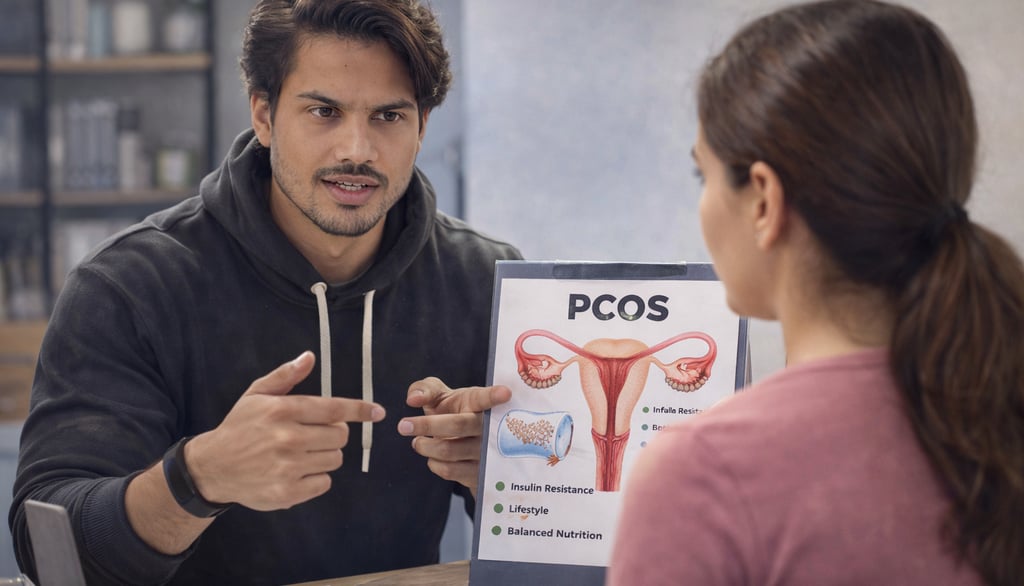

If you search online for “How to cure PCOD permanently”, you’ll find thousands of answers.
Some say it’s hormonal. Some say it’s genetic. Some say only medicines can help. Others promise miracle detoxes.
As a nutritionist working with Indian women dealing with PCOD, I’ll tell you something very important:
👉 PCOD is not just a hormone problem.
👉 It is primarily a metabolic and lifestyle condition.
And that changes everything about how we approach it.
This article will help you understand:
What is PCOD really
Common PCOD symptoms
Why weight gain and PCOD are linked
Whether PCOD can be cured permanently
The best PCOD diet and lifestyle changes in India
What actually works (and what doesn’t)
Let’s simplify it.
What is PCOD?
PCOD (Polycystic Ovarian Disease) is a condition where the ovaries produce higher-than-normal levels of androgens (male hormones), leading to:
Irregular menstrual cycles
Weight gain
Acne
Hair thinning
Difficulty losing fat
Many women are told: “It’s just hormonal.” But here’s the deeper truth: PCOD is strongly linked to insulin resistance. And insulin resistance is largely influenced by:
Diet
Physical activity
Sleep
Stress
Body fat percentage
This is why lifestyle plays a massive role.
PCOD vs PCOS – Is There a Difference?
In India, PCOD and PCOS are often used interchangeably. Technically:
PCOD refers more to ovarian dysfunction.
PCOS (Polycystic Ovary Syndrome) is considered a broader endocrine condition.
But from a practical lifestyle management perspective:
👉 The root driver in most Indian cases is metabolic imbalance.
So instead of obsessing over terminology, we focus on fixing the root cause.
Common PCOD Symptoms
If you are searching for “PCOD symptoms in women”, these are the most common ones I see in clients:
1️⃣ Irregular periods-
Cycles longer than 35 days
Missed periods
Heavy bleeding
2️⃣ Weight gain (especially around the abdomen)- This is one of the biggest concerns.
3️⃣ Difficulty losing weight - Even with dieting.
4️⃣ Acne and oily skin
5️⃣ Hair thinning or hair fall
6️⃣ Excess facial or body hair
7️⃣ Mood swings and low energy
Why Weight Gain Happens in PCOD?
This is where most advice goes wrong. PCOD is closely associated with insulin resistance. When insulin levels remain elevated:
The body stores more fat
Hunger increases
Cravings rise
Fat loss becomes harder
This is why many women with PCOD say, “I eat normal food but still gain weight.” The issue is not always overeating. It’s often how the body is processing energy.
Can PCOD Be Cured Permanently?
This is one of the most searched queries in India: “How to cure PCOD permanently?” Let me answer honestly.
PCOD may not “disappear” overnight. But symptoms can significantly improve, and sometimes reverse with:
Sustainable fat loss
Improved insulin sensitivity
Structured diet
Strength training
Sleep and stress control
I’ve seen women:
Get regular cycles back
Reduce acne
Improve energy
Lose stubborn weight
Not through extreme dieting. But through structured lifestyle change. So instead of asking: “Can PCOD be cured permanently?”
Ask: “Can my metabolism improve?” Because when metabolism improves, PCOD symptoms reduce.
Best PCOD Diet Plan (Indian Context)
This is where nutrition plays a major role.
1️⃣ Focus on Protein at Every Meal
Most Indian diets are carb-heavy and protein-light. Examples:
Roti + sabzi (very low protein)
Rice + dal (Little protein but often insufficient)
Protein helps in :
Improve satiety
Stabilise blood sugar
Preserve muscle
Improve insulin sensitivity
Best Protein Sources include:
Paneer (Low fat preferred)
Curd
Egg white
Lean Chicken
Tofu
Soya
Dal + chana combinations (with rice)
2️⃣ Reduce Refined Carbohydrates
Avoid excessive :
White bread
Sugary drinks
Mithai
Bakery items
Frequent snacking
This doesn’t mean zero carbs. It means, controlled portions, better quality carbs and balanced meals. Switch to whole grains High fibre carbs for majority part of the day and have some of the above mentioned items every now and then if you feel like. Goal is to have balance.
3️⃣ Don’t Starve Yourself
Extreme calorie restriction can worsen :
Hormonal imbalance
Stress levels
Metabolic slowdown
Sustainable fat loss works better than crash dieting.
4️⃣ Increase Fibre
As mentioned earlier, include fibre rich foods (carbs) in your diet like green vegetables, salads, fruits (in moderation) as fibre improves :
Gut health
Insulin response
Satiety
Role of Strength Training in PCOD
If there is one thing that dramatically improves PCOD outcomes, it is Strength training. Why? Because muscle improves insulin sensitivity.
The more muscle you have:
The better your body handles carbohydrates
The easier fat loss becomes
The better hormones regulate
Women with PCOD should prioritise:
3–4 strength sessions per week
Progressive overload
Compound movements
Cardio alone is not enough.
Relation between Sleep and PCOD
Poor sleep increases:
Cortisol
Insulin resistance
Cravings
Emotional eating
Aim for:
7–8 hours
Fixed sleep timing
Reduced screen time before bed
Hormones are deeply connected to recovery.
Relation between Stress and PCOD
Stress and PCOD kinda goes hand in hand. Stress alone is responsible for so many bad things in the human body. Chronic stress can :
Elevate cortisol
Disrupt ovulation
Increase belly fat (hinders with fat loss)
You cannot fix PCOD with diet alone if stress is constantly high.
Include the following to overcome/manage stress :
Walking
Meditation
Deep breathing
Time management
Supplements for PCOD – Do You Need Them?
Common supplements marketed for PCOD:
Myo-inositol (pharmaceutical drug)
Vitamin D
Omega-3
Magnesium
Some can support insulin sensitivity and hormonal balance. But remember that Supplements are just support. They don’t replace lifestyle. Never depend solely on pills.
PCOD and Fertility
One major concern is fertility. Improving :
Body fat percentage
Insulin sensitivity
Sleep
Stress
can significantly improve ovulatory function.
Many women see cycle improvements after losing just 5–10% body weight.
Common PCOD Myths in India
Myth 1: PCOD means you can never lose weight.
False. It may be slower — but not impossible.
Myth 2: Only medicines can manage PCOD.
Lifestyle is powerful than any medication.
Myth 3: Carbs must be eliminated completely.
Balance works better than extremes. Eat everything and enjoy life but make sure to keep the "unhealthy" items in limit.
Myth 4: PCOD is only about ovaries.
It’s deeply connected to metabolism. Improve that and PCOD will start to disappear.
FAQs About PCOD
Q1: What is the main cause of PCOD?
Insulin resistance combined with hormonal imbalance and lifestyle factors.
Q2: How can I reduce PCOD symptoms naturally?
PCOD can be cured naturally through:
Structured diet
Strength training
Fat loss (if needed)
Sleep improvement
Stress control
Q3: How much weight should I lose to cure PCOD?
Even 5–10% body fat reduction can improve symptoms significantly. Weight loss alone is not enough but when done with other things it can definitely help cure PCOD.
Q4: Is PCOD reversible?
Yes. Symptoms can improve dramatically with lifestyle changes.
Q5: Can exercise alone cure PCOD?
Exercise helps but nutrition and recovery are equally important.
Final Perspective (From a Nutritionist)
PCOD is not a life sentence. It is a signal. A signal that your metabolism, hormones, and lifestyle need restructuring. You just need to listen to your body.
Instead of:
Searching for miracle cures
Trying random diets
Relying only on medication
Focus on :
Consistent nutrition
Strength training
Sleep
Stress management
Sustainable fat loss
This is how real change happens.
Want Structured Guidance?
If you are struggling with:
PCOD
Insulin resistance
Weight gain
Diabetes
High blood pressure
You don’t need another random diet. You need a structured system.
Inside my Lifestyle Disease Management Program, we focus on:
Personalised nutrition
Strength-based training
Sustainable fat loss
Hormonal and metabolic health
Long-term lifestyle restructuring
Because lifestyle diseases don’t need shortcuts. They need systems.
If you’re ready to fix the root cause instead of chasing temporary solutions, this is your next step.